
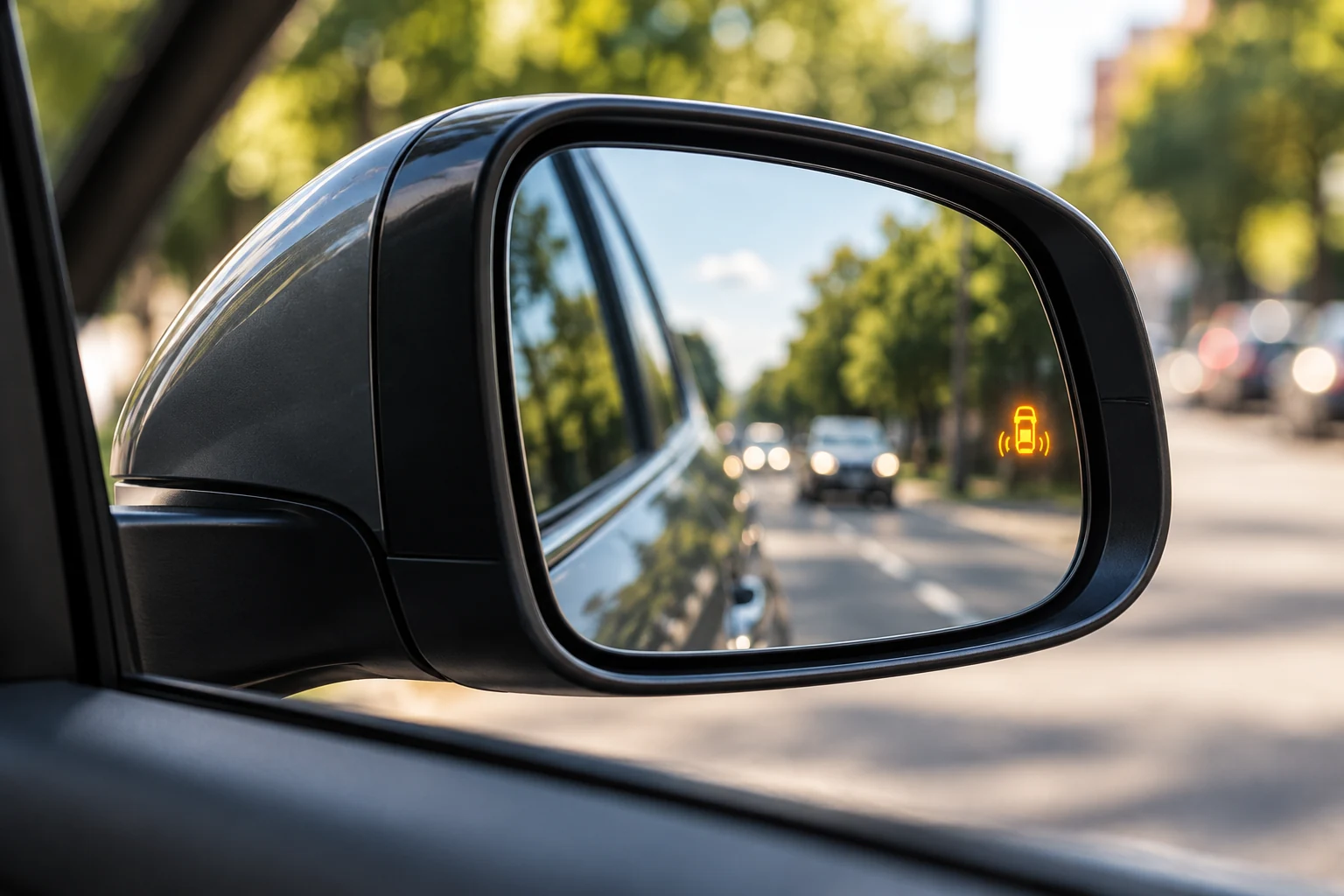
A small light appears in a door mirror as another vehicle travels beside you. Blind-spot warning is designed to add information about traffic that can be difficult to see. To use that information well, you need to know what the light means in the particular car and what the system does not promise.
Separate a warning from an intervention
The NHTSA guide to driver-assistance technologies distinguishes blind-spot warning from blind-spot intervention. A warning alerts the driver to a detected vehicle. An intervention feature can add braking or steering assistance in certain circumstances. A car with one function does not necessarily have the other.
This distinction matters when comparing a familiar vehicle with a rental or replacement. Similar-looking mirror symbols and familiar marketing terms do not establish identical behavior. Look up the feature name in the vehicle’s manual and check whether the description concerns an alert, an intervention, or both.
An unlit indicator is not an all-clear
In its S90 blind-spot information guidance, Volvo explicitly cautions that the absence of an indication does not confirm that changing lanes is safe. That is a useful principle for reading an assistance feature: a display reports what the system has detected under its operating conditions, rather than certifying every part of the surrounding space.
Keep the ordinary observation task in view. A warning light does not replace mirrors, appropriate direct checks, signals, or your judgment about the traffic and road. If something you can see conflicts with an assumption about the display, do not rely on the assumption.
Find the conditions for your exact vehicle
Honda’s explanation of its blind-spot information technology also directs owners to the manual for the functions available in their vehicle. Model year, equipment, and configuration matter. Rather than borrowing a general claim from an advertisement, use the manual to answer a small set of practical questions.
- When is the feature available, and how is availability shown?
- What does a steady or flashing indicator mean?
- What conditions, objects, or sensor obstructions can limit detection?
- Does towing or carrying equipment change how the system operates?
- What should you do if an unavailable-system message appears?
Learn the controls while parked
Locate the relevant manual section and settings before you need them. If the display changes unexpectedly, consult the instructions at an appropriate stop and arrange assistance if the manual calls for it. Do not attempt to test the detection boundary by approaching another road user or deliberately creating a close situation.
Keep a note of the exact warning message when it is safe to do so; that is more useful than remembering only that a light appeared. For another common source of confusion, read the differences between lane warning, lane keeping, and lane centering.