
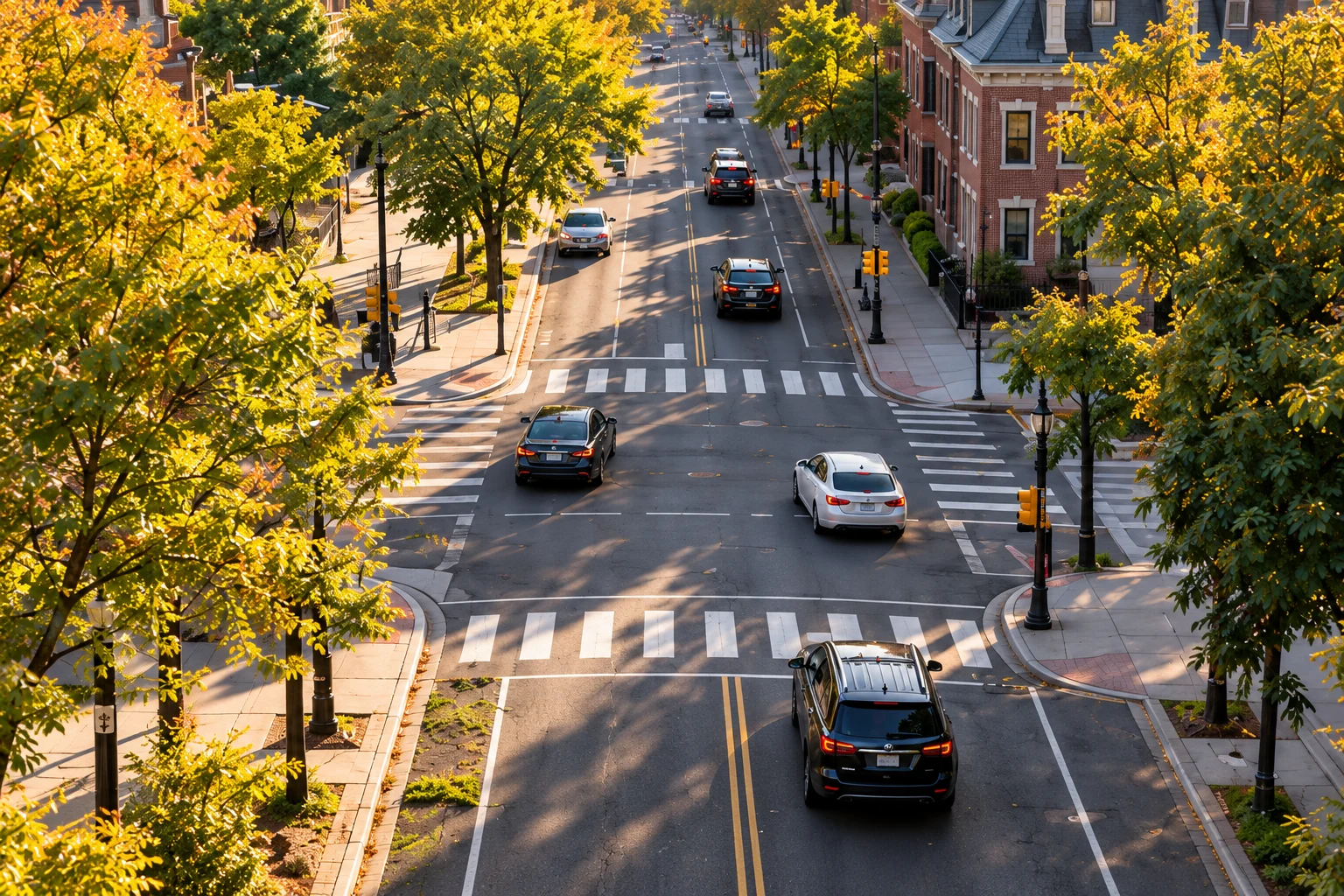
You spend several minutes in a queue, pass no damaged vehicle or roadwork, and suddenly find yourself moving again. It is tempting to conclude that the traffic stopped for no reason. Often, the reason was a change in how many vehicles could move through one part of the road, or an interruption that had already cleared before you arrived.
A busy road can reach a pinch point
A bottleneck does not need to look like a narrow opening. An entrance ramp, a lane ending, or an area where drivers weave between exits can affect traffic flow. The Federal Highway Administration explains recurring bottlenecks as localized constraints that become noticeable when the arriving traffic exceeds what that section can process.
Think of a familiar interchange that becomes slow at roughly the same time each weekday. The road may work comfortably at another hour. The relevant question is how demand and the layout interact at that location, rather than whether the whole highway appears wide enough.
The queue has a life of its own
The FHWA explanation of traffic shock waves describes boundaries between faster and slower traffic moving through a queue. Vehicles continue traveling forward while the point where drivers begin slowing can move backward along the road. This is one reason a line of brake lights can reach you well before you see any obstruction.
A cleared incident can leave a queue behind it. By the time you reach the place where traffic was originally interrupted, there may be nothing left to see. The disappearance of the original cause and the disappearance of its delay are separate events.
Notice the pattern without guessing the cause
After a journey, it can be useful to consider where the slowdown began and where it ended. Did it line up with an entrance ramp? Was an exit queue spilling back? Did the same place move freely on your return? These observations can help you describe an experience, but they cannot establish the cause of one particular traffic jam.
- Compare several journeys before calling a delay a recurring pattern.
- Check an official travel-information service for reported incidents or work zones.
- Distinguish what you saw from what you inferred about other drivers.
Give the next journey some breathing room
Build a little flexibility into trips through a regularly congested area, and review another departure time or route before leaving. Use our guide to checking road closures to find the appropriate official service. A navigation estimate is a planning aid; it cannot promise that a queue will have disappeared when you reach it.
Keep traffic research for a safe stop or for a passenger. NHTSA identifies adjusting navigation and other non-driving activities as distractions. Understanding a slowdown is useful, but your attention still belongs on the changing traffic around you.